

Organic Amine Purification
Removal of heat-stable salts from organic amines using electrodialysis technology
Amine solution contamination
- In industries such as petroleum, electric power, chemicals, metallurgy, and shipbuilding, the alkanolamine process is widely employed in desulfurization, decarbonization, and CCUS (carbon capture, utilization, and storage) units. However, factors such as the continuous recycling of the amine solution eventually lead to various issues, including solution degradation, reduced gas absorption efficiency, increased energy consumption, solvent loss, and compromised product quality.
The hazards of heat-stable salts
- Promotes amine solution foaming and affects gas quality. Heat-stable salts act as initiators for amine solution foaming, producing stable foam; this foaming reduces the absorption capacity of the desulfurization and decarbonization unit, preventing it from meeting design specifications and resulting in off-specification purified gas.
- Reduce absorption efficiency; replenish with fresh amine solution. Heat-stable salts cannot be removed via thermal regeneration; theoretically, the presence of a certain molar amount of these salts results in the immobilization of an equivalent molar amount of the amine solvent, directly leading to reduced gas absorption efficiency and the need to replenish the solvent with fresh material.
- Increased risk of corrosion; unscheduled maintenance.
Organic Amine Heat-Stable Salt — Electrodialysis Amine Solution Purification Technology
- The amine solution first passes through a precision filter to remove suspended solids and other impurities before entering the dilute stream compartment; under the influence of a direct-current electric field, anions and cations within the dilute stream compartment (i.e., the lean MDEA solution) migrate directionally through ion-exchange membranes on both sides into the concentrated stream compartment. Consequently, the concentration of heat-stable anions and cations in the dilute stream compartment gradually decreases while the concentration of ionic salts in the concentrated stream compartment rises, ultimately reducing the salt content in the MDEA system to below 1%.
Characteristics of electrodialysis equipment:
- Continuous equipment operation
- No acid or alkali regeneration required
- Periodic cleaning of the membrane stack only
- Cleaning solution is typically 1% citric acid
- Membrane stack service life of 1–3 years
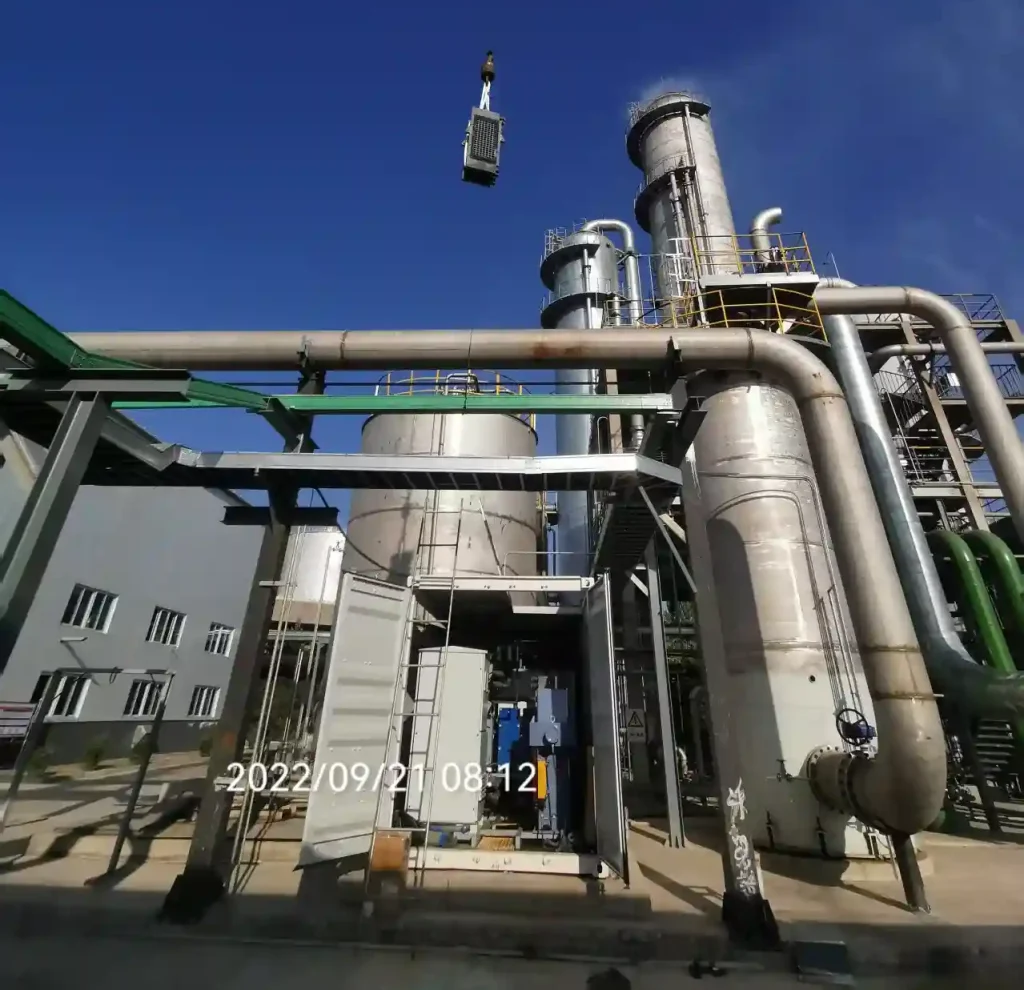
(in Henan Province, China)
CO₂ from iron and steel furnace flue gas is captured using an organic amine solution and combined with hydrogen (H₂) from coke oven gas to produce liquid methanol fuel via hydrogenation. The amine solution purification system utilizes containerized electrodialysis equipment (model AC25-240) to process the captured 160,000 tons of CO₂.
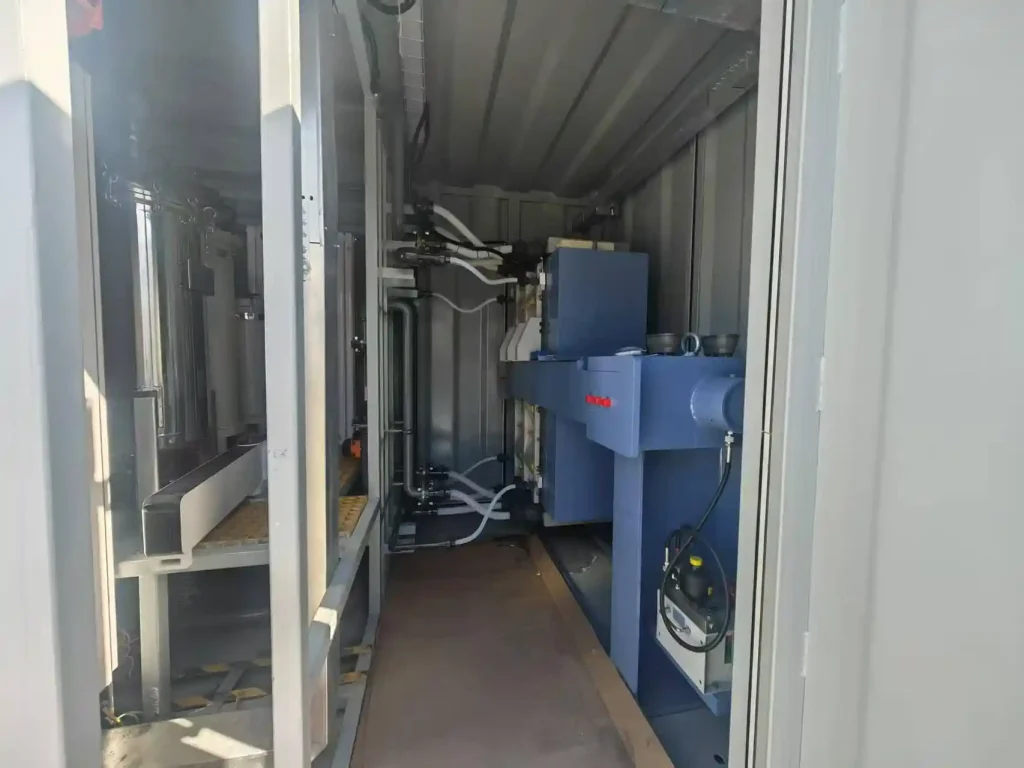
(in Inner Mongolia Province, China)
A CCUS (Carbon Capture, Utilization, and Storage) base with a capacity of 2 million tonnes.
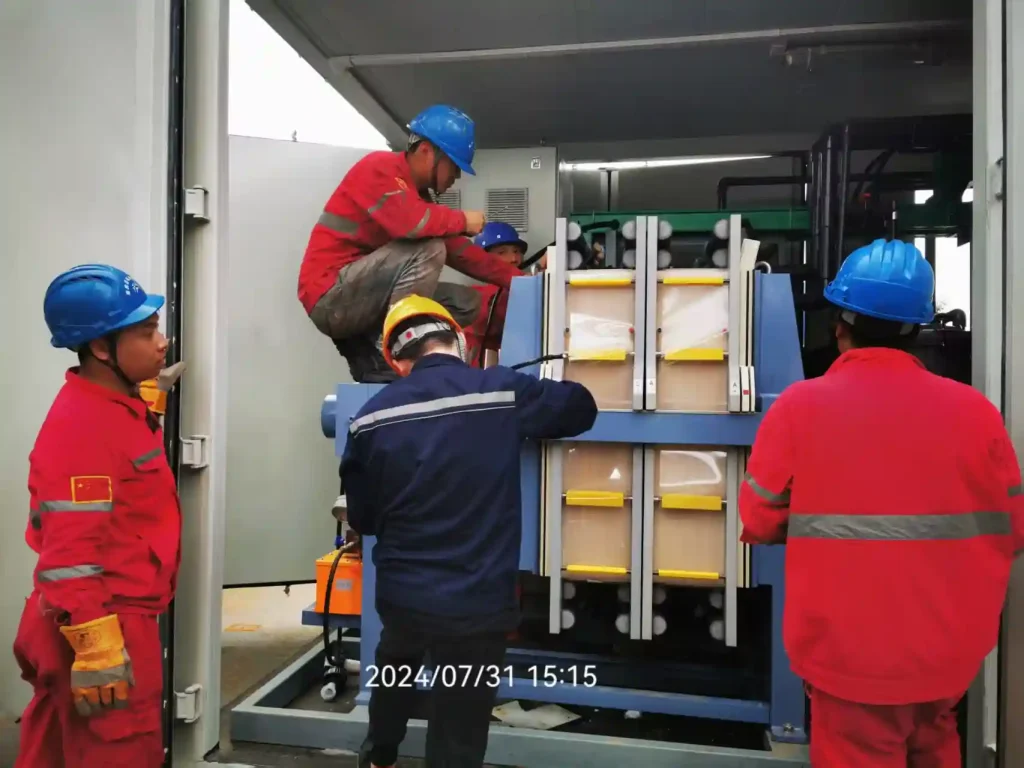
(in Beijing, China)
The project employs chemical absorption CO₂ capture technology and establishes a demonstration line—integrated with a cement kiln—designed for the low-energy, high-efficiency capture of CO₂ from complex flue gas streams, with a capacity of 100,000 tons per year.
For the amine solution purification process, the project utilizes Lanran’s AC25-240 containerized electrodialysis equipment, reducing the content of heat-stable amine salts to less than 1%.
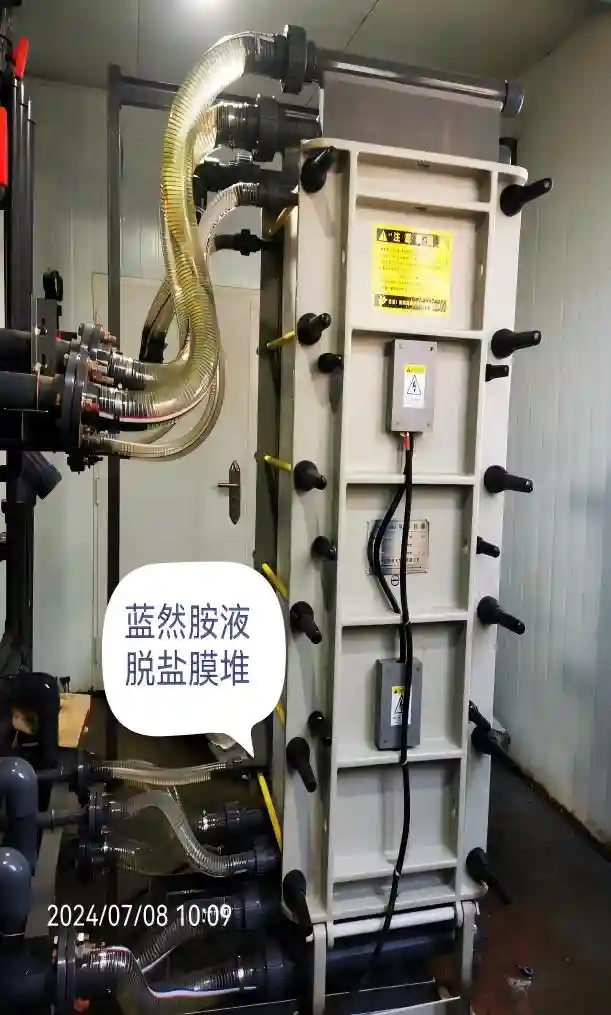
(in Anhui Province, China)
A 50,000-tonne CO₂ capture and purification CCUS demonstration project was commissioned at a cement plant, utilizing Lanran’s ED416-130 electrodialysis membrane stacks to purify the amine solution to a heat-stable salt content of less than 1%.