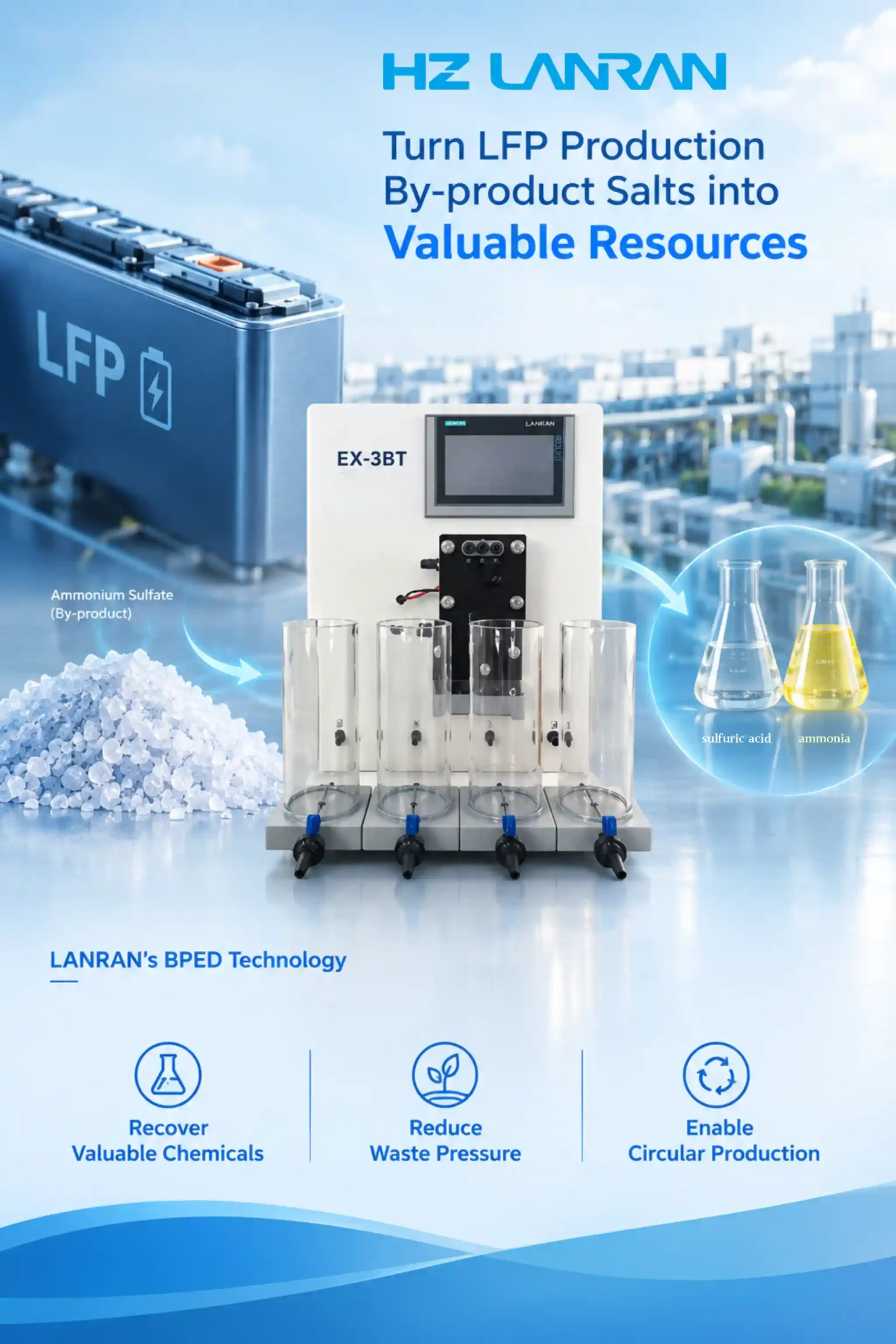
Ammonium Sulfate Recovery from LFP Battery Production with BPED Technology
Converting By-products into Reusable Chemical Resources
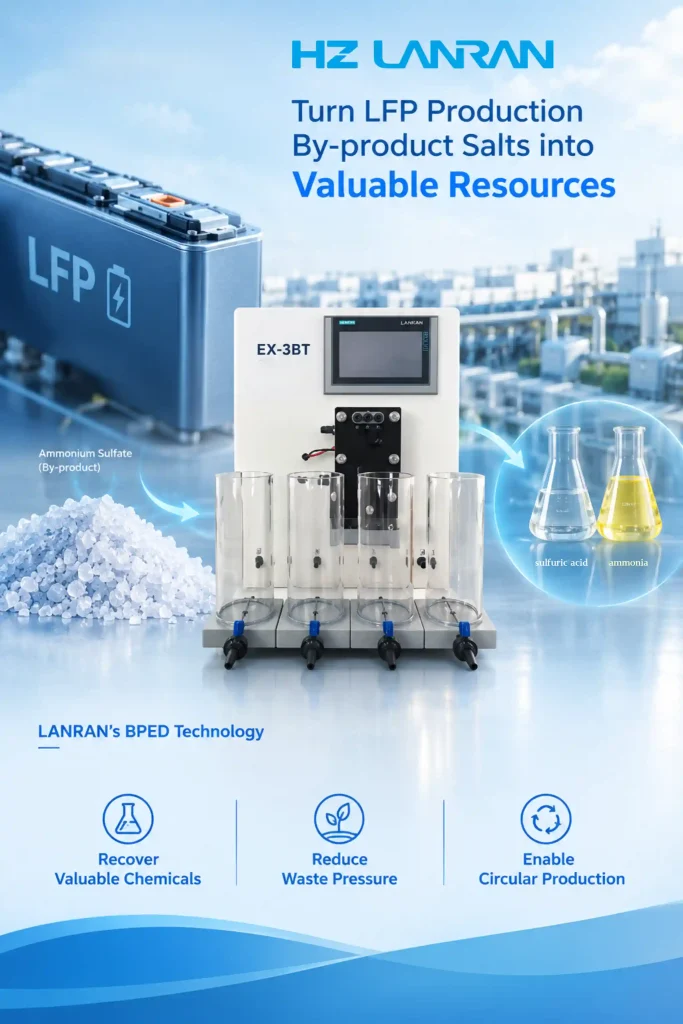
Lithium iron phosphate (LFP) batteries are widely used in electric vehicles and energy storage systems. During iron phosphate precursor production, certain manufacturing processes generate ammonium sulfate-rich by-product streams, creating challenges in waste management and resource utilization.
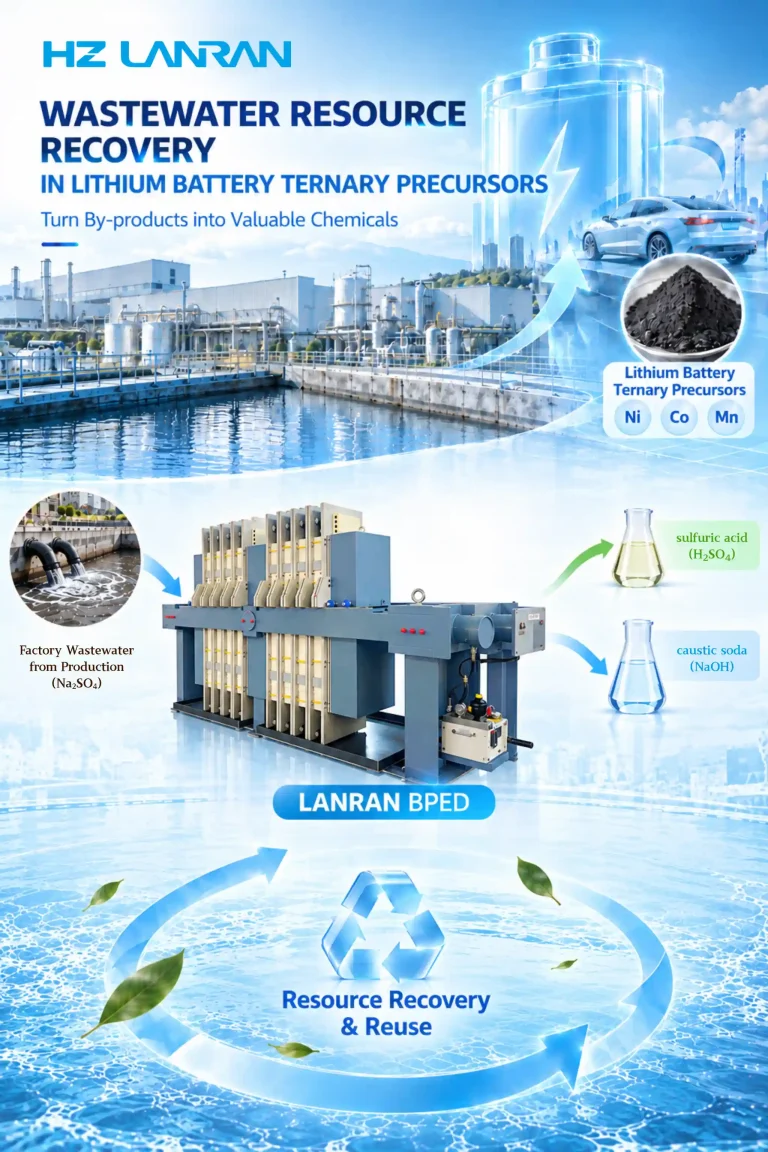
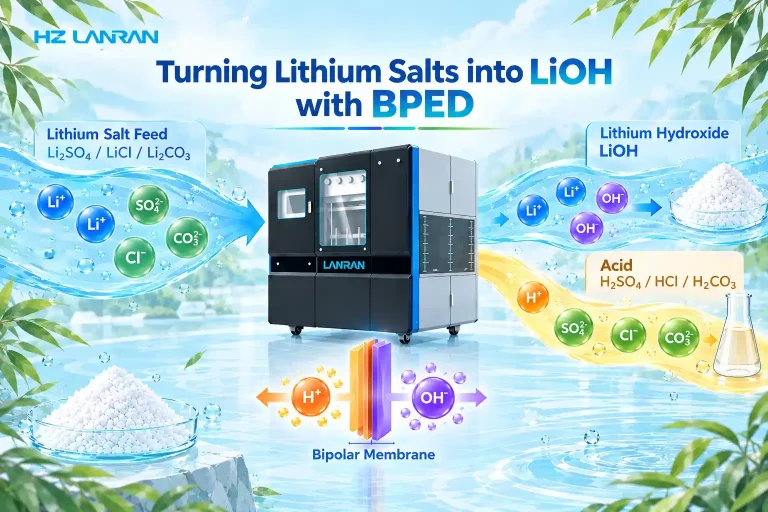
LANRAN’s Bipolar Membrane Electrodialysis (BPED) technology provides a solution for recovering valuable chemicals from these streams, helping manufacturers improve resource efficiency and explore more sustainable production processes.
How BPED Technology Enables Ammonium Sulfate Recovery
LANRAN integrates targeted pretreatment, impurity removal, and BPED to process ammonium sulfate-rich streams. After appropriate purification, BPED facilitates the conversion of ammonium sulfate into ammonia and sulfuric acid for potential reuse or further processing.
This process creates an opportunity to recover useful chemical resources instead of treating the by-product stream solely as waste.
Key Benefits for LFP Precursor Manufacturers
- Recover valuable chemicals: Convert ammonium sulfate into ammonia and sulfuric acid for potential industrial reuse.
- Improve by-product utilization: Reduce reliance on disposal-focused treatment by recovering resources from process streams.
- Support circular manufacturing: Integrate purification and BPED conversion into a more resource-efficient LFP precursor production process.
LANRAN BPED Solutions for LFP Production
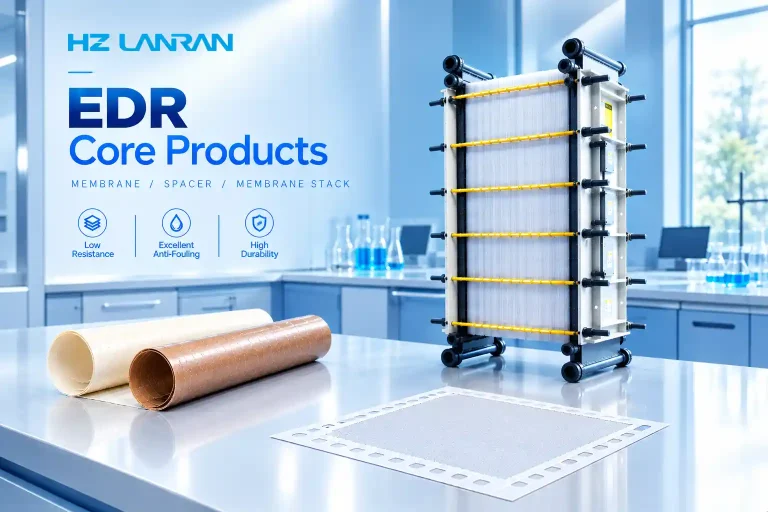
With expertise in ion-exchange membranes and electrodialysis technology, LANRAN provides solutions for industrial salt conversion and resource recovery. Our BPED technology helps LFP material manufacturers explore new opportunities to recover chemicals, optimize by-product management, and improve resource utilization.
Contact LANRAN to discuss ammonium sulfate recovery solutions for lithium battery material production.