High-Salt Textile Wastewater: A Waste or a Resource?
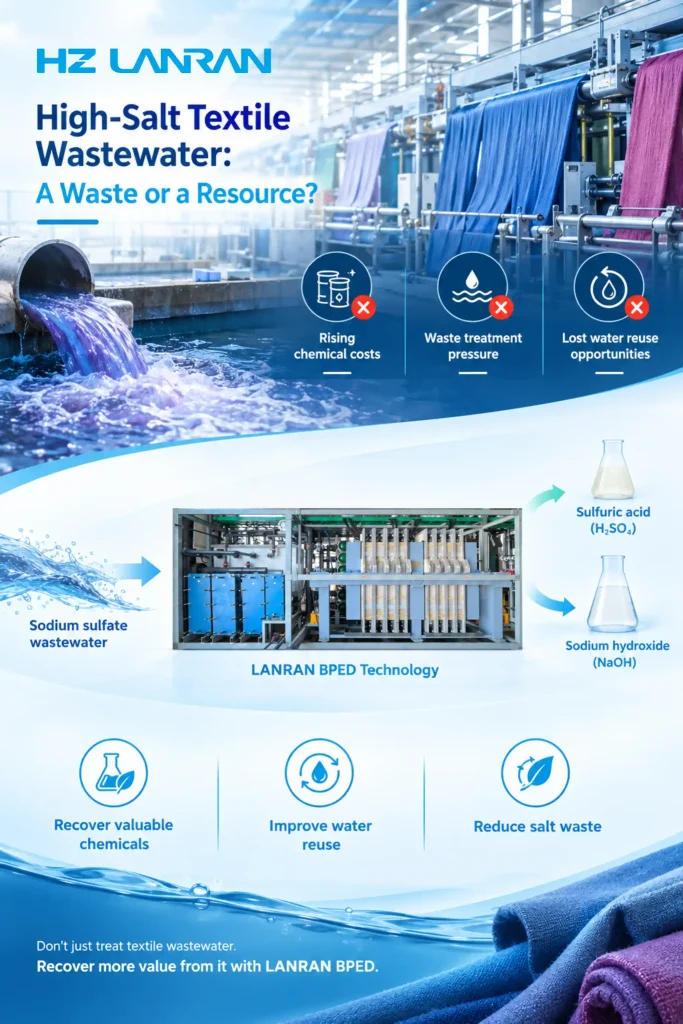
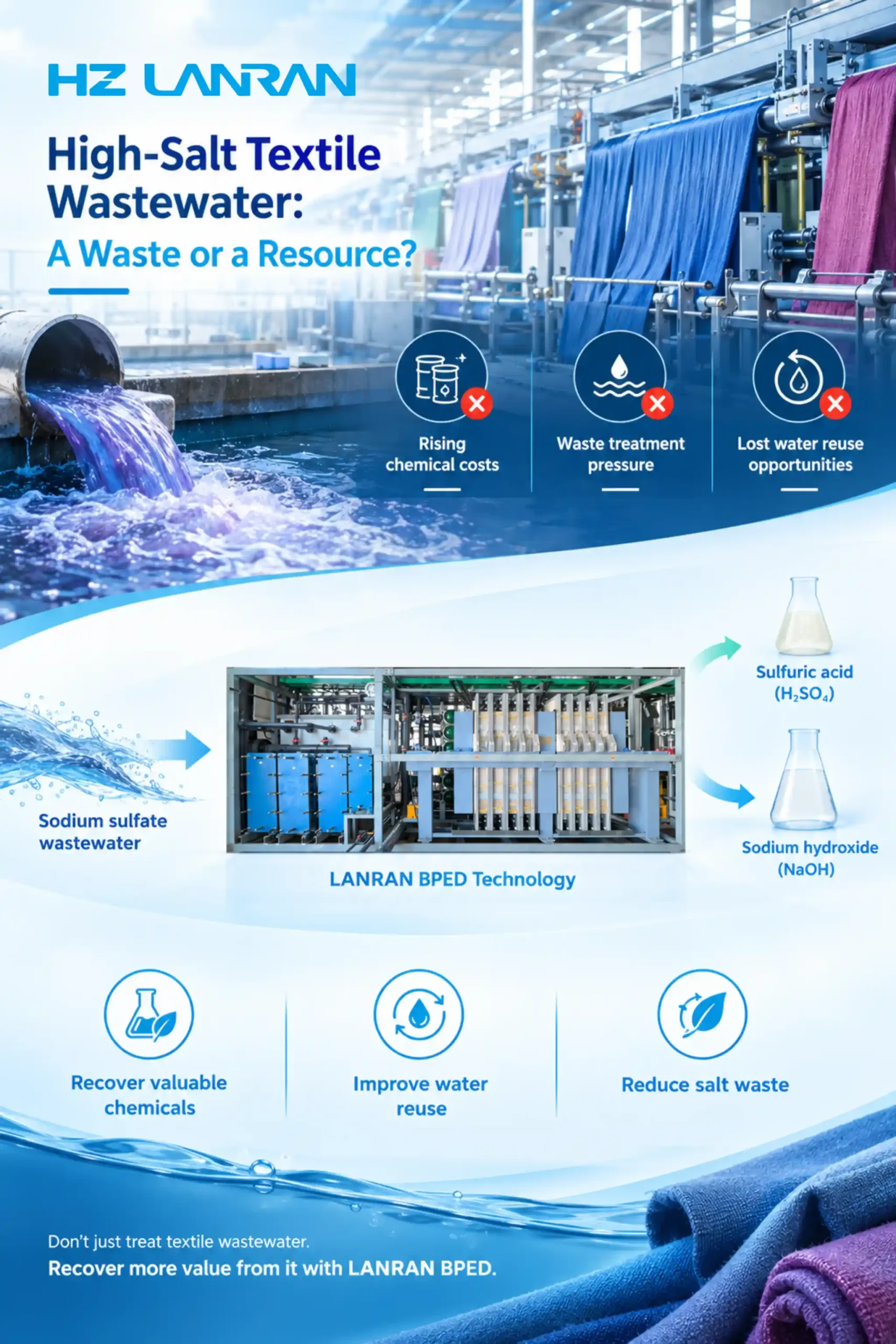
For textile dyeing and finishing plants, high-salt wastewater brings three major challenges:
❌ Higher chemical costs — Plants need fresh acid and alkali for production. Meanwhile, valuable salts in wastewater go unused.
❌ Waste treatment pressure — High salt levels make wastewater treatment more difficult. They also increase the cost of salt disposal.
❌ Lost water recovery opportunities — Without effective salt recovery, plants may lose valuable water and resources.
♻️ LANRAN BPED technology helps turn waste into value.
First, electrodialysis (ED) concentrates sodium sulfate (Na₂SO₄) from wastewater. Then, bipolar membrane electrodialysis (BPED) converts it into reusable sulfuric acid (H₂SO₄) and caustic soda (NaOH).
This process helps textile manufacturers:
🔹 Recover useful chemicals and reduce the need for fresh acid and alkali.
🔹 Improve resource recovery and support wastewater reuse.
🔹 Reduce salt waste and move toward more circular production.
Don’t just treat textile wastewater. Recover more value from it with LANRAN BPED.