From Sodium Sulfate Waste to Valuable Acid & Alkali: BPED Solutions by Lanran
Turn Sodium Sulfate into Valuable Resources
In many industries, sodium sulfate (Na₂SO₄) is generated as a byproduct—often leading to high disposal costs and environmental compliance pressure.
Lanran’s Bipolar Membrane Electrodialysis (BPED) technology offers a practical solution:
✔ Convert sodium sulfate into sulfuric acid (H₂SO₄) and caustic soda (NaOH)
✔ Reduce waste discharge and treatment costs
✔ Enable closed-loop chemical reuse within your process
This approach transforms waste streams into valuable, reusable resources, supporting both economic and environmental goals.
What Is BPED and How Does It Work?
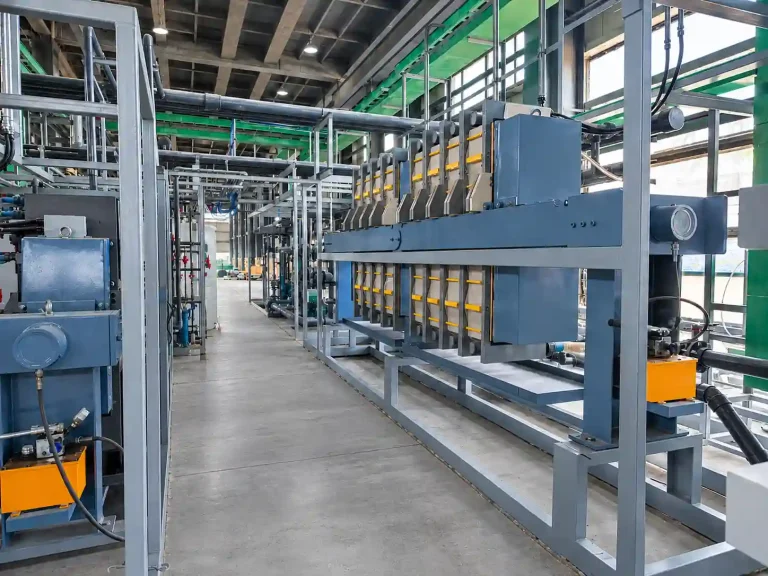
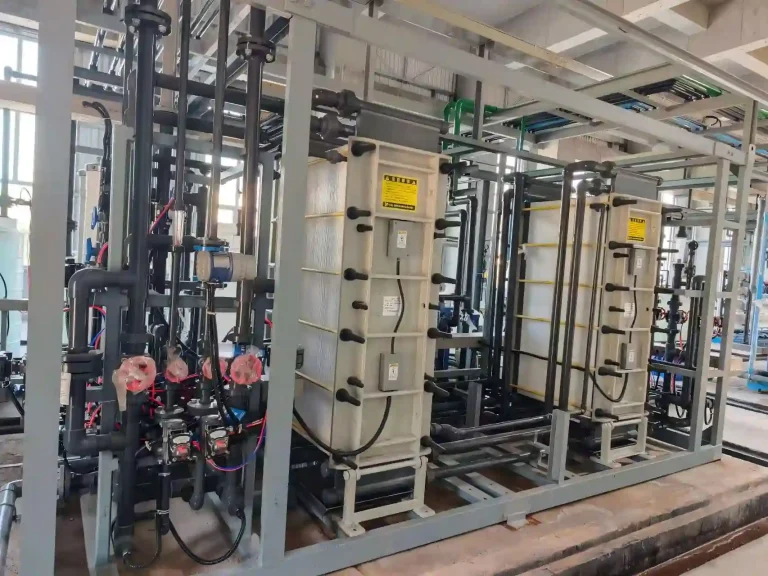
Bipolar Membrane Electrodialysis (BPED) is an advanced separation process that combines bipolar membranes with anion and cation exchange membranes to split salts into acids and bases.
Core Mechanism:
- Ion Migration
Under an electric field, Na⁺ ions migrate toward the cathode through cation exchange membranes, while SO₄²⁻ ions move toward the anode through anion exchange membranes. - Water Splitting
At the bipolar membrane interface, water dissociates into H⁺ and OH⁻ ions. - Acid & Base Formation
H⁺ combines with SO₄²⁻ to form sulfuric acid (H₂SO₄), while OH⁻ reacts with Na⁺ to produce sodium hydroxide (NaOH). - Continuous Production
The process enables continuous, selective generation of acid and alkali without chemical addition, minimizing secondary pollution.
Key Advantages of BPED Technology
- No external chemicals required – eliminates the need for acid/alkali dosing
- Lower operating costs – reduced waste handling and chemical purchasing
- High product purity – suitable for reuse in industrial processes
- Energy-efficient and low-carbon – supports sustainability targets
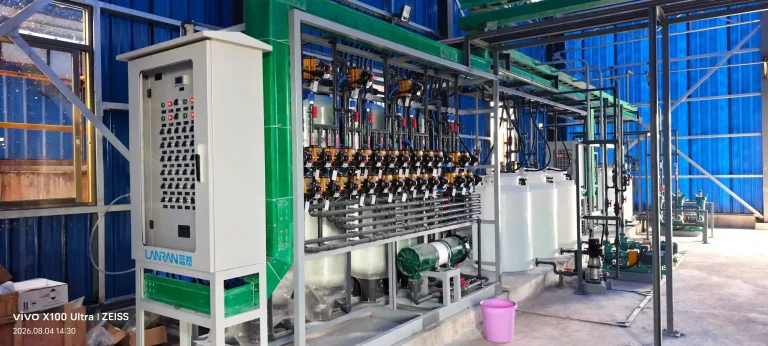
- Modular and scalable – from pilot systems to large-scale industrial plants
Proven Industrial Applications
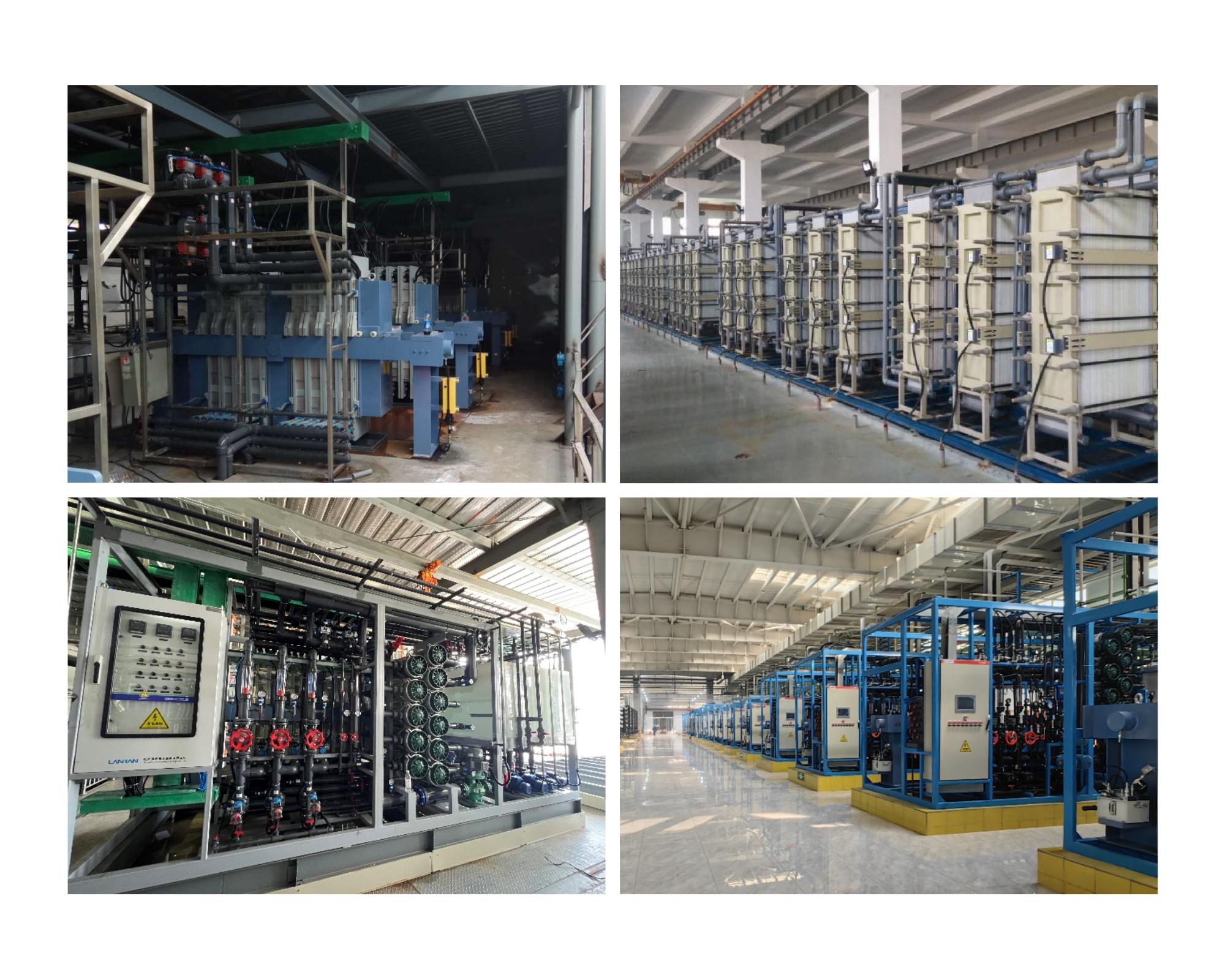
Lanran has successfully implemented BPED systems across multiple industries, delivering stable, long-term performance:
Textile Industry (Sichuan, China)
· Capacity: 40,000 tons/year Na₂SO₄
· Output: H₂SO₄ and NaOH for internal reuse
· Operation: Running continuously since 2017
· Value: Reduced chemical procurement and wastewater discharge costs
Lithium-ion Battery Materials (Ternary Precursor Production, Zhejiang, China)
· Capacity: 1,650 tons/year Na₂SO₄
· Process Integration: UF + RO + Resin + BPED
· Value: High-purity recovery and stable operation in complex process streams
Pharmaceutical Industry – Zero Liquid Discharge (Inner Mongolia, China)
· Capacity: 17,160 tons/year Na₂SO₄
· Application: Water reuse and salt resource recovery
· Value: Enables closed-loop operation and supports strict environmental compliance
Papermaking & Printing/Dyeing Industry – Wastewater Resource Utilization
· Water Reuse: Up to 40,000 m³/day
· Na₂SO₄ Recovery: ~1,800 m³/day
· Value: Achieves closed-loop water and chemical management, reducing discharge and operating costs
Why Choose Lanran BPED Solutions
- In-house membrane manufacturing
Full control over ion exchange membrane quality and performance - Custom-designed electrodialysis stacks
Tailored to your feed composition, flow rate, and target outputs - Turnkey system integration
From membranes and stacks to complete process engineering - Proven industrial track record
Multiple large-scale projects across chemical, metallurgical, and battery industries - Long-term stable operation
Demonstrated performance in continuous industrial environments
Start Converting Waste into Value
Sodium sulfate no longer needs to be treated as waste. With BPED, it becomes a resource for acid and alkali production—improving both your bottom line and environmental performance.
Looking to evaluate BPED for your process?
Contact Lanran’s technical team for a customized solution.