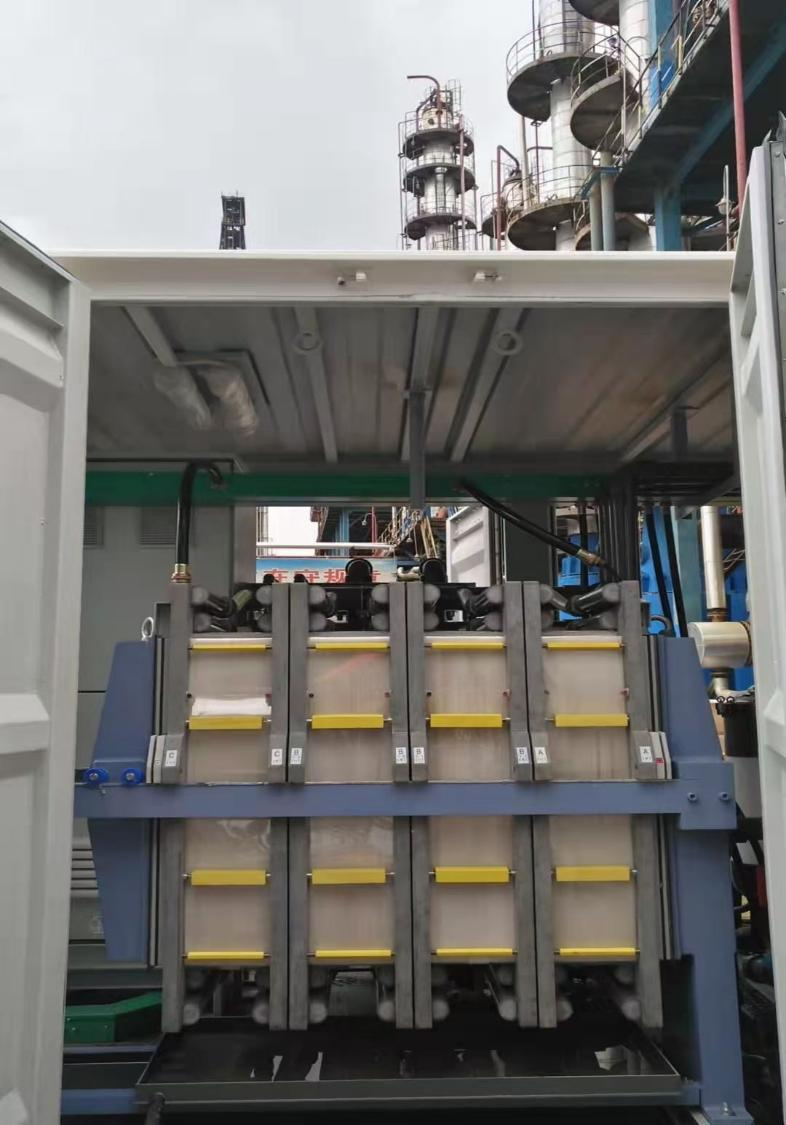
Electrodialysis for Efficient Organic Amine Purification | Lanran Technology
In continuous industrial processes such as refining, natural gas treatment, and acid gas removal, organic amines are widely used to absorb carbon dioxide and other acidic gases. Maintaining amine solution performance requires effective management of byproducts, particularly Heat Stable Salts (HSS).
The Impact of Heat-Stable Salts (HSS)
During long-term operation, impurities in feed gases (SOx, NOx), oxidation reactions, and thermal degradation can generate HSS, which accumulates over time. Typical HSS content rises from the initial level to 3–5%, and in some cases, can exceed 6%. High HSS concentrations can result in:
- Reduced effective amine concentration, lowering absorption efficiency
- Increased risk of equipment corrosion
- Foaming and mass transfer fluctuations
Effective HSS control is therefore critical for the long-term stability and efficiency of amine-based gas treatment systems.
Common Industrial HSS Management Methods
Industrial practices for HSS removal include:
- Ion Exchange – Selective removal of cations and anions using resins, suitable for both continuous and batch purification.
- Thermal Treatment – Chemical conversion to release amines and separate salts, effective for high HSS levels.
- Membrane Separation – Selective ion migration enables continuous control of salt content, minimizing performance fluctuations.
Advantages of Electrodialysis (ED) for Amine Purification
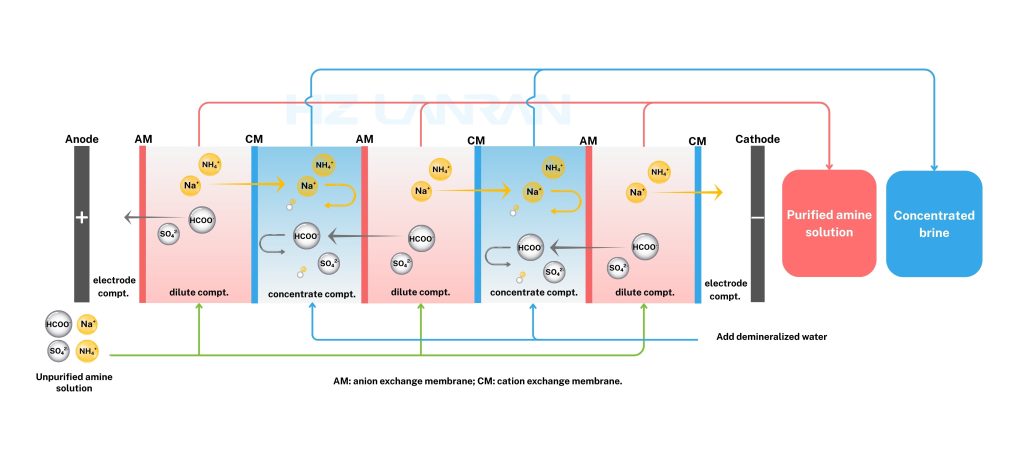
Electrodialysis (ED) uses ion exchange membranes under an electric field to selectively remove cations and anions. Compared to traditional methods, ED offers:
- Continuous operation – Can purify part of the circulating amine solution or handle concentrated HSS streams.
- No external alkali required – Driven solely by electricity, reducing chemical consumption.
- High removal efficiency – HSS levels can be reduced to 0.3–0.8%, stabilizing amine performance.
- Controlled long-term costs – Membrane modules are easy to replace and can be maintained via online or periodic cleaning.
- Improved process stability – Continuous salt control reduces performance fluctuations and maintains consistent absorption efficiency.
For example, a 1,000-ton amine purification project with 5% HSS achieved HSS control at 0.3–0.8%, producing approximately 400 tons of HSS-concentrated solution. The system operates at about 19 kWh, demonstrating high ion removal efficiency and controllable operational costs.
Application Prospects
As industrial systems scale up, amine management becomes increasingly critical. Electrodialysis is not only suitable for refining and natural gas treatment but also applicable to other organic amine systems containing ionic impurities, enabling continuous and efficient purification.
Lanran Technology Solutions
Lanran Technology delivers industrial electrodialysis solutions designed to remove HSS effectively, stabilize amine performance, and optimize long-term operational costs. Online amine management ensures reliable and efficient operation, providing both environmental and economic benefits for industrial gas treatment processes.