CBAM Compliance: A “Low-Carbon Product Passport” for Global Trade
As the EU accelerates its climate agenda under the Carbon Border Adjustment Mechanism (CBAM), carbon emissions are no longer just an environmental concern—they are becoming a direct cost factor in international trade.
What is CBAM—and why it matters
CBAM is designed to prevent carbon leakage by aligning the carbon cost of imported goods with those produced within the EU under the EU Emissions Trading System.
According to the European Commission, CBAM currently applies to carbon-intensive sectors such as:
Steel
Aluminum
Cement
Fertilizers
Hydrogen
Electricity
Since October 2023, importers have been required to report embedded emissions. From 2026 onward, they will need to purchase CBAM certificates based on verified carbon intensity.
In practical terms, products with lower embedded emissions will gain a clear cost advantage in the EU market.
Embedded carbon: the new competitive metric
“Embedded carbon” refers to the total greenhouse gas emissions generated during production. For electrochemical and separation processes, this is largely influenced by:
Energy source (grid vs. renewable electricity)
Process efficiency
Chemical consumption
This is where process innovation becomes critical.
How electrodialysis enables lower-carbon production
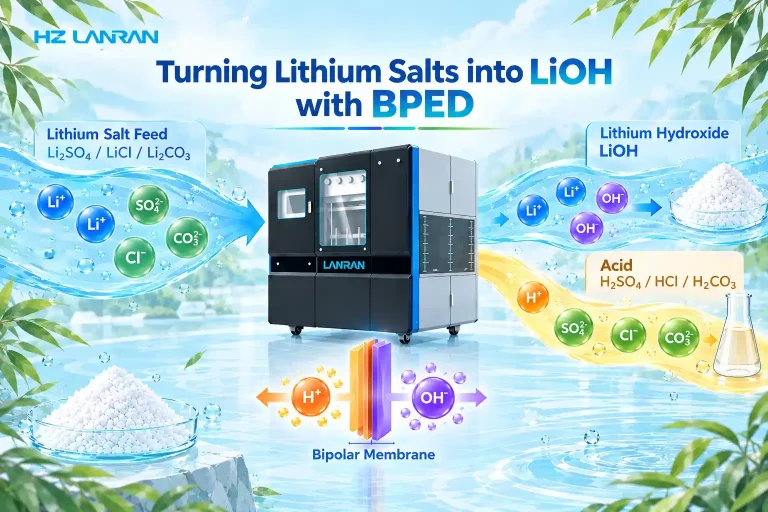
Compared with traditional thermal separation or chemical-intensive processes, electrodialysis (ED) and bipolar membrane electrodialysis (BMED) offer measurable advantages:
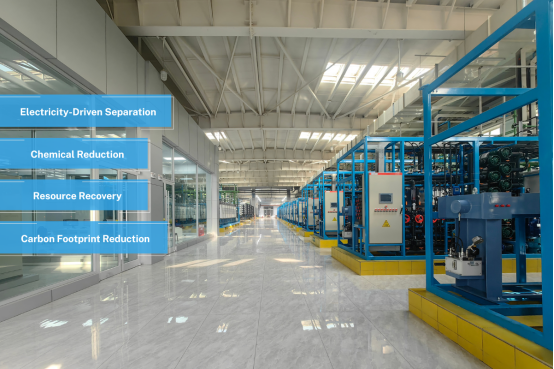
Electricity-driven separation: avoids high-temperature evaporation and reduces fossil fuel dependency
Chemical reduction: minimizes the need for external acid/alkali
Process integration: enables resource recovery and closed-loop systems
When powered by renewable electricity (“green power”), these systems can significantly reduce the carbon footprint of the final product.
A practical pathway to CBAM readiness
By integrating green electricity + membrane-based separation, manufacturers can:
Lower embedded carbon emissions at the source
Improve transparency in carbon reporting
Reduce future CBAM certificate costs
Strengthen competitiveness in EU exports
In this context, low-carbon production is no longer optional—it functions as a “passport” for accessing regulated markets.
Moving forward
As CBAM transitions from reporting to full implementation, carbon efficiency will increasingly define product value.
Adopting advanced separation technologies such as electrodialysis—combined with renewable energy—offers a practical and scalable pathway to compliance.
Lanran Tech focuses on ion exchange membranes and electrodialysis solutions that support resource efficiency and carbon reduction across industries—from lithium processing to wastewater reuse.
As carbon regulations evolve, process-level innovation will be key to staying competitive in global markets.