Bipolar Membrane Electrodialysis: Green Electricity-Powered Carbon Capture for CBAM and IRA Compliance
What if the key to low-cost carbon capture isn’t heat—but electrons?
Most CCUS processes rely on high-temperature steam to release CO₂ from capture agents. But a new wave of technology is flipping the script: electrochemical CO₂ release powered by renewable electricity.
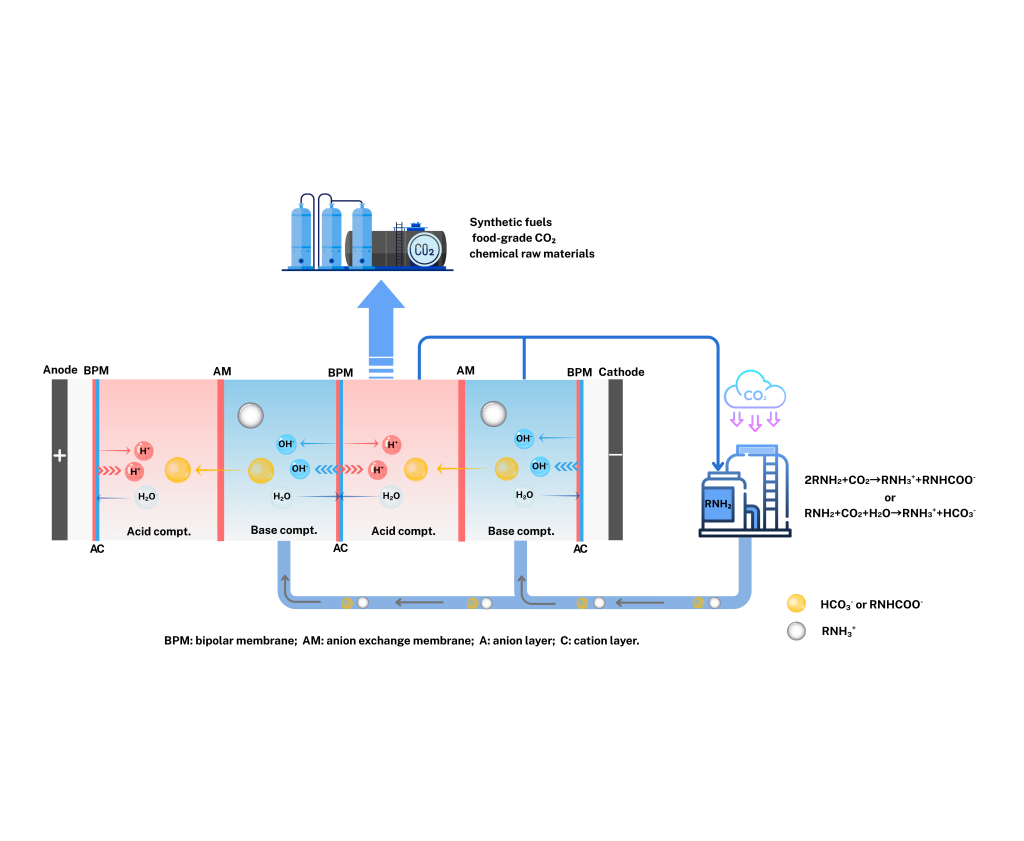
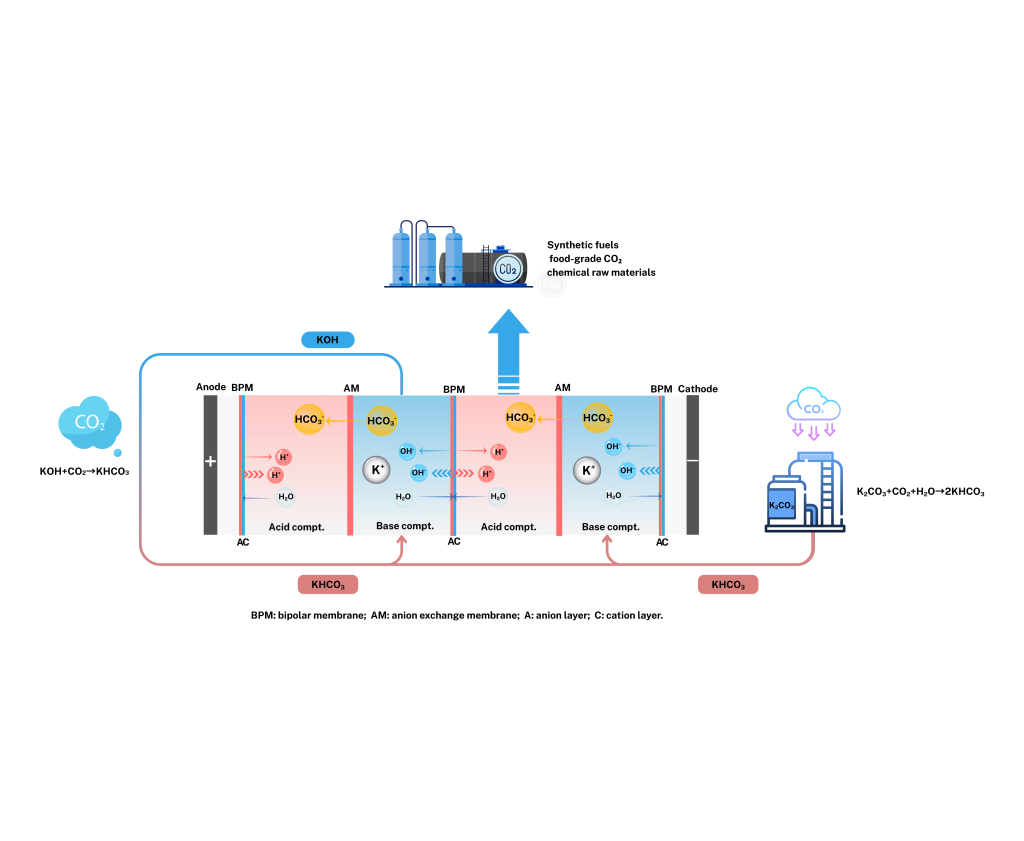
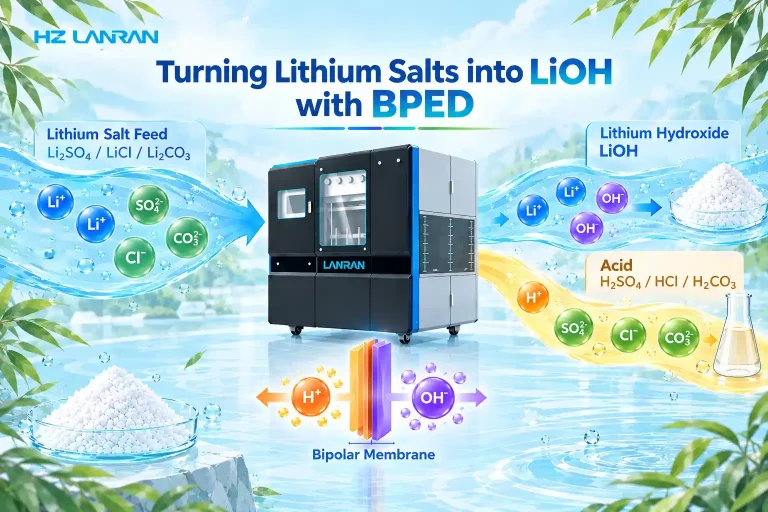
Here’s how it works in a two-chamber bipolar membrane electrodialysis (BPED) system:
🔹 Capture phase:
A bicarbonate solution (like KHCO₃) or an organic amine absorbs CO₂ from air or flue gas, forming carbonate or carbamate compounds. The CO₂ is now “trapped” in liquid form.
🔹 Release & regeneration phase:
In the BPED stack, water is split into H⁺ and OH⁻ using only electricity.
The H⁺ migrates into the acid chamber, reacts with the bicarbonate, and releases high-purity CO₂.
The OH⁻ enters the base chamber, regenerating the capture agent (KOH or free amine) for the next cycle.
No steam. No combustion. Just clean electricity driving the loop.
💡 Why this matters for CBAM and IRA competitiveness:
✅ Lower carbon intensity – Using green electricity instead of fossil-derived heat means the process itself emits far less CO₂.
✅ Policy-ready – Under CBAM, products with lower embedded carbon face fewer tariffs. Under the IRA, clean electricity-based processes may qualify for 45Q tax credits.
✅ Circular – The capture agent is regenerated and reused, minimizing chemical waste and operating costs.
As renewables get cheaper, electrifying carbon capture could turn CO₂ from a liability into a low-cost, high-purity feedstock for fuels, chemicals, or even food-grade applications.
The future of CCUS isn’t just about capturing carbon—it’s about doing it with electrons, not molecules.