“Solid Waste Ten Measures”: Industrial Solid Waste Treatment Enters the Era of Resource Circularity, Opening New Opportunities for Electrically Driven Separation Technologies
In 2026, China officially released the Solid Waste Comprehensive Management Action Plan (commonly referred to as the “Solid Waste Ten Measures”). As a top-level policy framework for solid waste governance during the 15th Five-Year Plan period, it sends a clear and decisive signal: industrial solid waste management in China is shifting from end-of-pipe disposal to full resource circularity.
Policy Direction: From Disposal to Resource Recovery
The plan sets ambitious targets, including:
- Reducing hazardous waste landfill disposal to below 5%
- Increasing the hazardous waste resource recovery rate to over 95%
- Integrating used batteries, photovoltaic modules, and wind turbine blades into national recycling systems
- Promoting deep integration of pollution reduction and carbon reduction with the circular economy
These policy shifts indicate that traditional high-cost treatment models—such as landfilling, incineration, and external disposal—are rapidly losing competitiveness.
In the future, industrial enterprises will no longer rely solely on “waste treatment capacity.” Instead, they will require system-level resource recovery capabilities that support low-carbon production and circular utilization. This transition is also creating significant growth opportunities for electrically driven separation technologies such as bipolar membrane electrodialysis (BPED) and electrodialysis (ED).
1. Changing Hazardous Waste Logic: From Compliance Disposal to Resource Recovery
In industries such as chemicals, hydrometallurgy, new energy materials, and battery recycling, large volumes of waste acid, waste salt, and high-salinity mother liquors have traditionally been treated through external transport or landfill disposal.
However, as landfill restrictions tighten, conventional approaches are facing increasing pressure:
- Rising treatment costs
- Stricter environmental regulations
- Increasing carbon emission constraints
- Significant resource inefficiency
At the same time, the value of “waste as a resource” is becoming increasingly evident. High-salinity wastewater, once considered a burden, is now recognized as a secondary resource.
BPED-based Resource Recovery Solutions
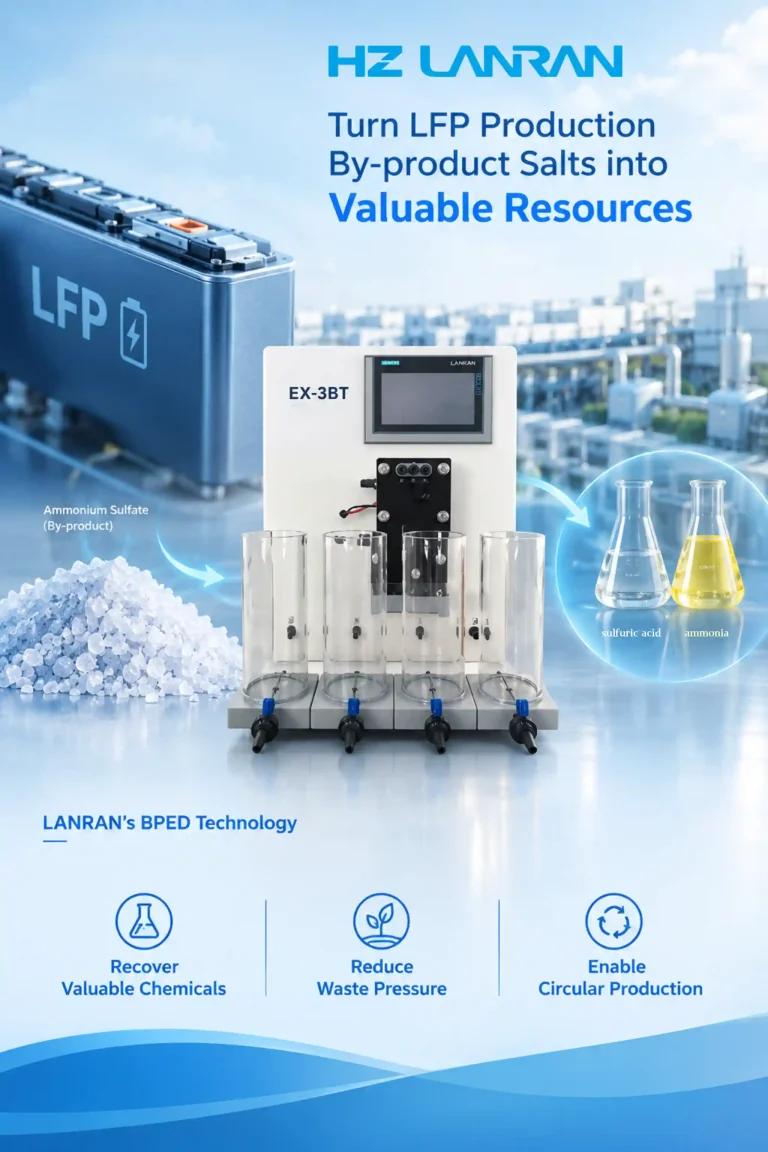
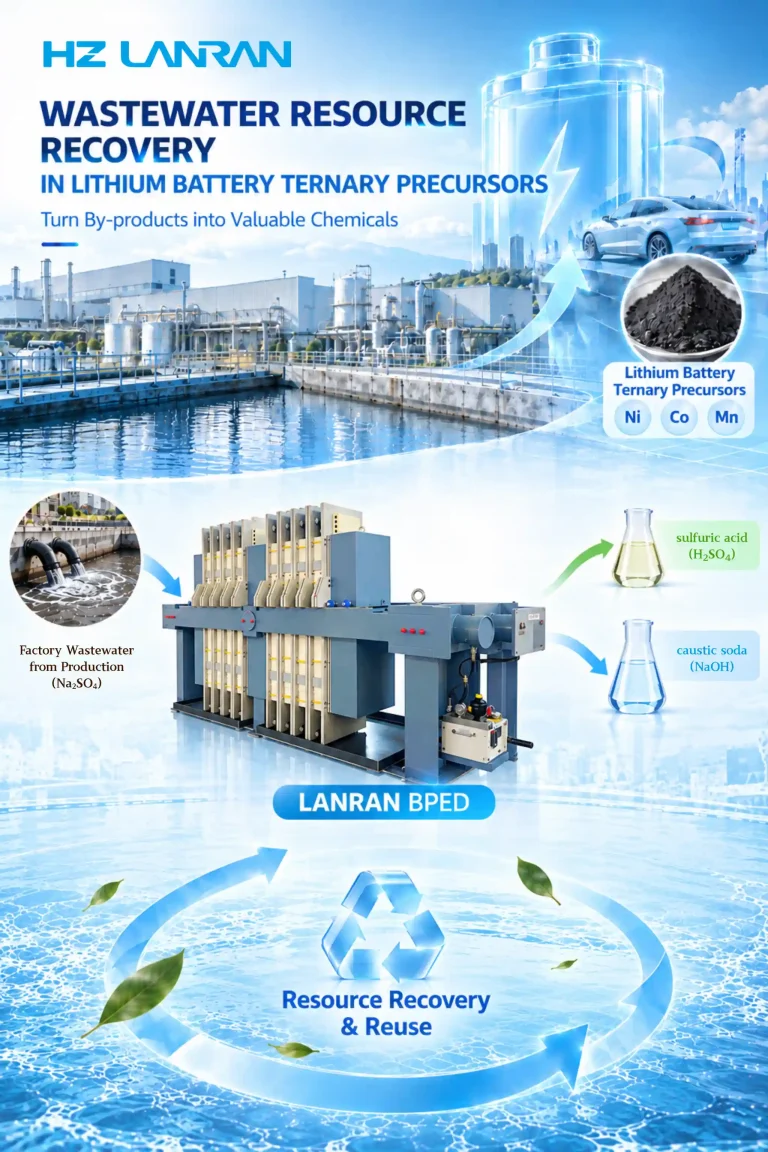
Using bipolar membrane electrodialysis (BPED) technology, developed by Hangzhou Lanran Technology, industrial salt streams can be converted into valuable chemicals:
- Sodium sulfate → sulfuric acid + sodium hydroxide
- Sodium chloride → hydrochloric acid + sodium hydroxide
- Waste acid recovery and reuse
- High-salinity waste volume reduction
Example applications include:
Industrial park project in Xinjiang: sodium sulfate wastewater converted into sulfuric acid and sodium hydroxide (15,000 tons/year)
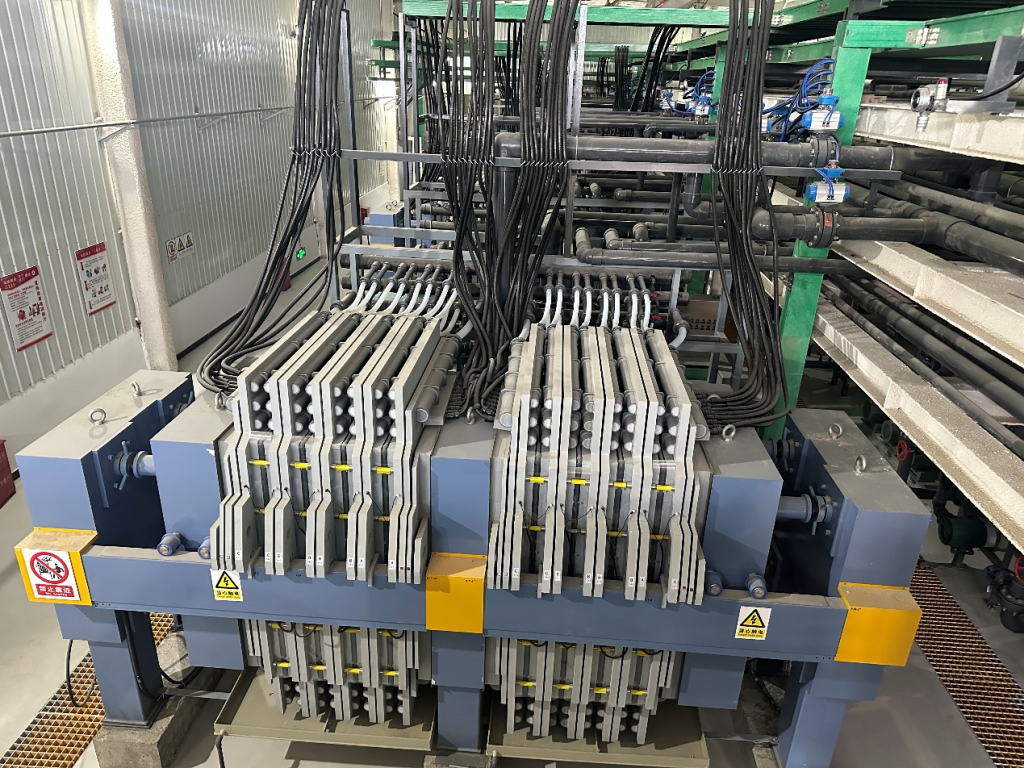
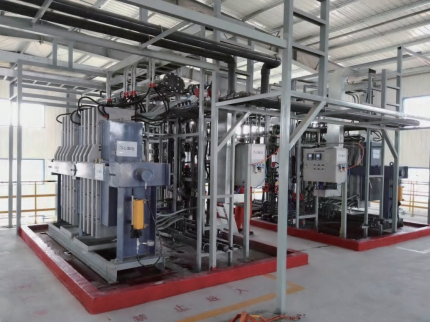
Metallurgical wastewater resource recovery: sodium chloride waste stream converted into hydrochloric acid and sodium hydroxide (3,000 tons/year)
Through salt-to-acid/alkali regeneration, enterprises can simultaneously reduce hazardous waste output, lower landfill dependency, and reduce procurement costs for acids and bases. This aligns closely with the “resource recovery first” principle emphasized in the policy framework.
2. Bulk Solid Waste Enters the Stage of Integrated Resource Utilization
Bulk solid wastes such as phosphogypsum, tailings, and metallurgical residues have long been characterized by:
- Large stockpiles
- Low utilization rates
- Environmental risks
- Long-term land occupation
The “Solid Waste Ten Measures” promotes a shift from storage-based management to value-oriented utilization, emphasizing:
- Resource recovery
- Energy synergy
- Process integration
- Pollution and carbon reduction coordination
This marks a transition from simple waste reduction to process-driven resource circularity and low-carbon manufacturing.
In industries such as phosphate chemicals, new energy materials, and fine chemicals, many sulfate-rich by-products and high-salinity streams still hold significant resource potential.
Electrically Driven Separation Technology Advantage
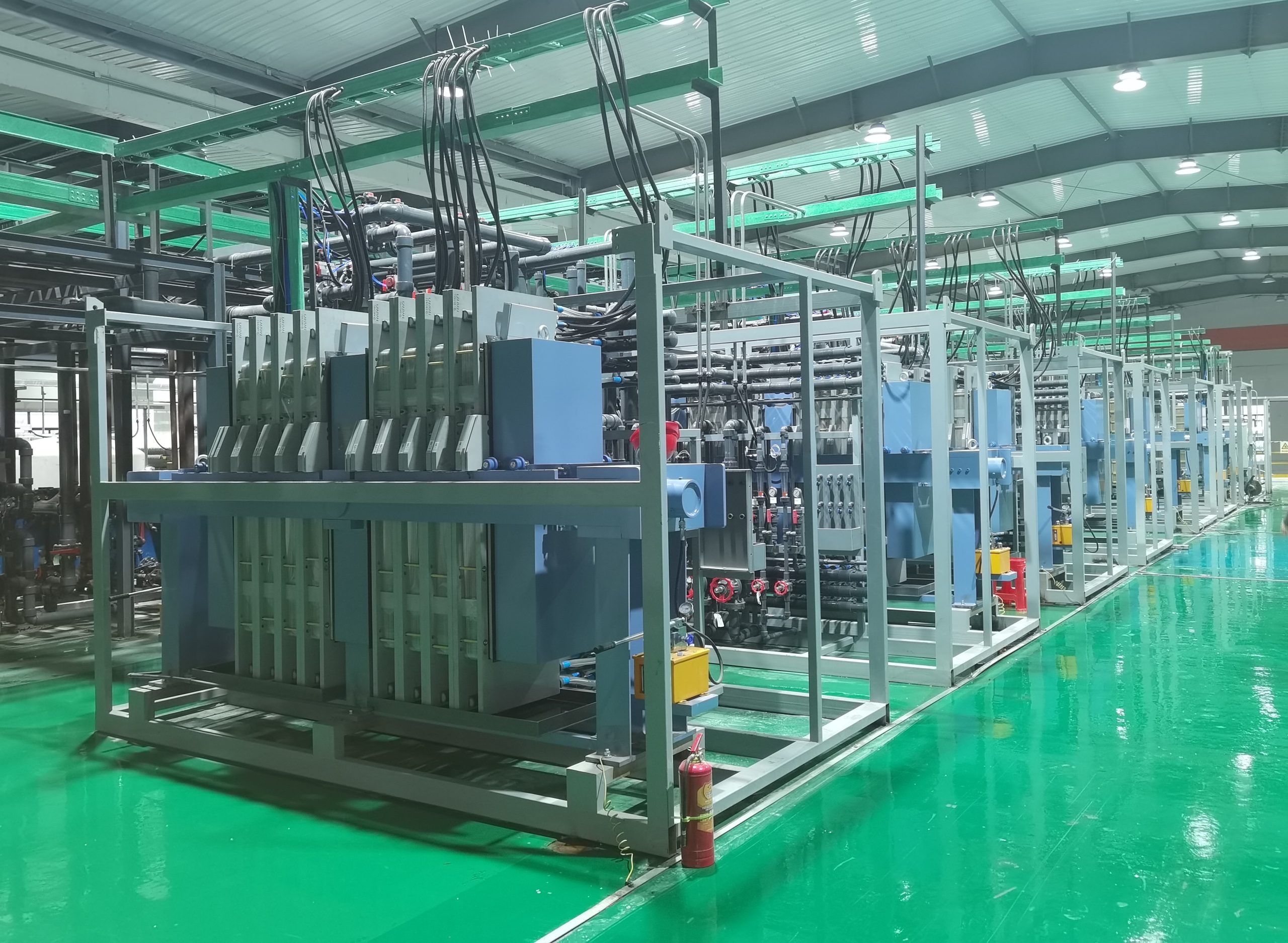
Lanran’s electrically driven membrane separation technology enables:
- Selective ion separation
- Acid and alkali regeneration
- Material concentration
- Resource recovery from complex brines
Compared with traditional thermal evaporation processes, it offers:
- Continuous operation
- Lower chemical consumption
- Easier resource integration
- Lower carbon intensity potential
As a result, it is increasingly becoming a key enabling technology for industrial resource circularity.
3. Rapid Growth of New Energy Solid Waste Drives Strong Recycling Demand
With the rapid expansion of the new energy sector, the policy explicitly includes end-of-life batteries, photovoltaic modules, and wind turbine blades into national recycling systems. This reflects a structural shift from “rapid expansion” to “green circular development.”
In lithium battery production and recycling processes, large volumes of lithium-containing wastewater, by-product salts, and high-salinity effluents are emerging as critical resource streams.
Key Application Areas
Lanran’s technologies are currently applied in:
- Salt Lake lithium extraction
- Battery recycling leachate treatment
- Nickel-cobalt-manganese precursor mother liquor recycling
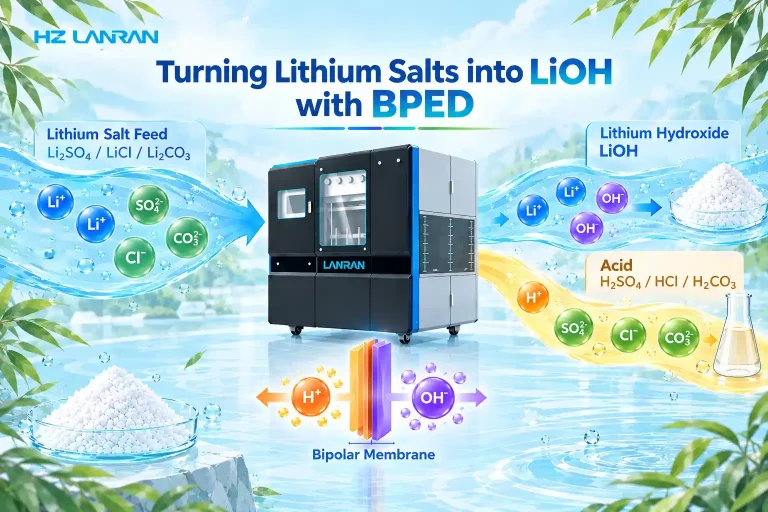
- Lithium hydroxide production
- Lithium salt concentration and purification
Example projects:
Anhui New Energy Enterprise: Battery dismantling solution converted into lithium hydroxide (6,000 tons/year)
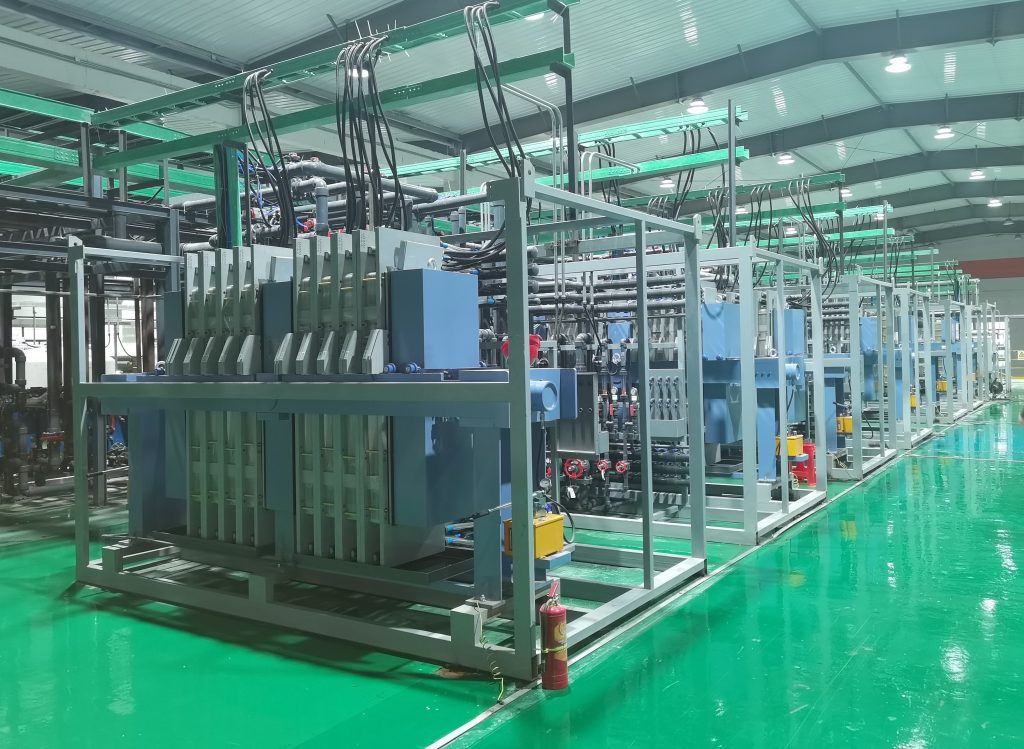
Jiangxi new energy enterprise: lithium sulfate processed via BPED into battery-grade lithium hydroxide monohydrate (10,000 tons/year)
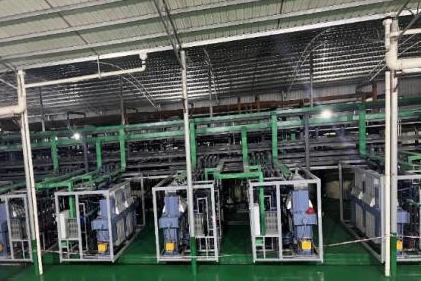
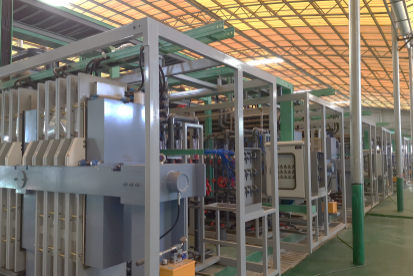
These applications enable closed-loop recovery of lithium and acid-base resources, reducing both waste discharge and carbon intensity, and supporting greener manufacturing in the new energy industry.
4. Low-Carbon Transition Reshaping Industrial Separation Technologies
The policy also highlights the acceleration of advanced environmental equipment, resource recovery systems, and low-carbon process technologies.
At its core, this reflects a structural transformation from energy-intensive end-of-pipe treatment to low-carbon, process-integrated resource recovery systems.
Traditional evaporation-crystallization processes, while widely used, typically suffer from:
- High steam consumption
- High operating costs
- High energy intensity
- Elevated carbon emissions
In contrast, electrically driven separation technologies such as electrodialysis and bipolar membrane electrodialysis offer:
- Electricity-driven operation (compatible with renewable energy)
- Continuous processing capability
- Easy system integration
- Strong compatibility with circular economy systems
As the global transition toward carbon neutrality accelerates, these technologies are expected to play an increasingly important role in industrial separation and resource recovery.
5. From Environmental Cost to Resource Value Creation
During the 15th Five-Year Plan period, the fundamental logic of industrial environmental management is shifting.
The focus is moving away from “how to reduce treatment cost” toward how to generate value through resource circularity.
Whether in hazardous waste recycling, waste salt conversion into acids and bases, or new energy recycling systems, the core objective is to transform waste streams back into usable industrial resources.
As one of the early pioneers in the industrialization of bipolar membrane and electrodialysis technologies in China, Hangzhou Lanran Technology has developed a fully integrated industrial chain covering:
- Ion exchange membrane R&D and manufacturing
- Bipolar membrane development
- Electrodialysis system engineering and integration
With over 390 engineering project experiences, the company has built extensive application expertise across multiple industries.
Looking ahead, Lanran will continue to advance its philosophy of “industrial cleanliness and resource harmony”, driving the application of bipolar membrane and electrically driven separation technologies across industries and supporting global enterprises in achieving low-carbon and sustainable development.