From Battery Black Mass to Battery-Grade LiOH·H₂O: How Bipolar Membrane Electrodialysis Enables Sustainable Lithium Recycling
As global demand for lithium-ion batteries continues to grow, efficient recovery of lithium from end-of-life batteries has become a critical challenge for the battery recycling industry. Traditional lithium recovery routes often involve high chemical consumption, multiple processing steps, and the generation of large volumes of solid waste.
To address these challenges, Hangzhou Lanran Technology has developed Bipolar Membrane Electrodialysis (BPED) solutions that enable the direct conversion of lithium salt solutions derived from battery black mass into high-value lithium hydroxide, supporting a more sustainable and circular battery supply chain.
What Is Battery Black Mass?
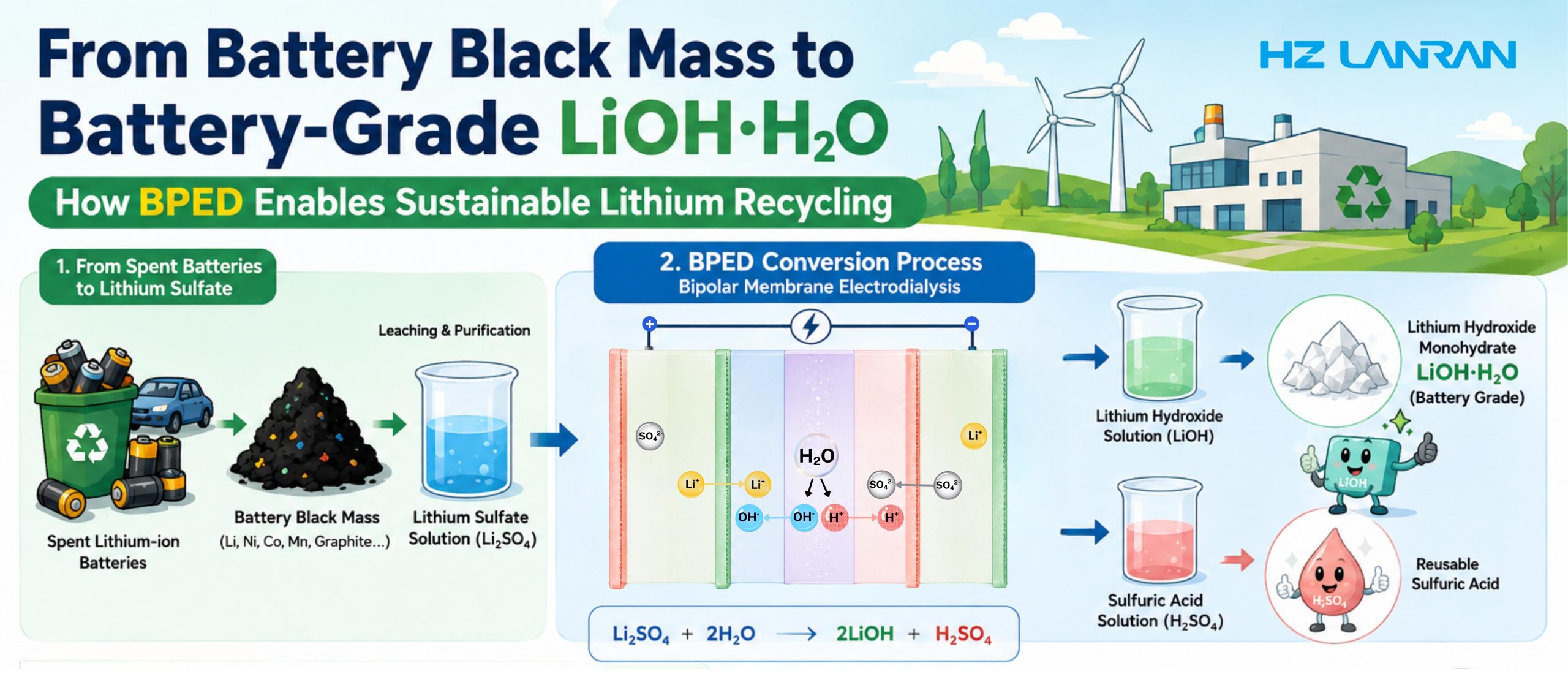
Battery black mass is the valuable powder obtained after dismantling and pretreating spent lithium-ion batteries. It typically contains lithium, nickel, cobalt, manganese, graphite, and other battery materials.
Through hydrometallurgical processing, lithium contained in black mass is leached into solution and commonly recovered as lithium sulfate (Li₂SO₄). The next challenge is converting this lithium salt into battery-grade lithium hydroxide monohydrate (LiOH·H₂O), a key raw material for high-nickel cathode production.
How Bipolar Membrane Electrodialysis Converts Lithium Sulfate into Lithium Hydroxide
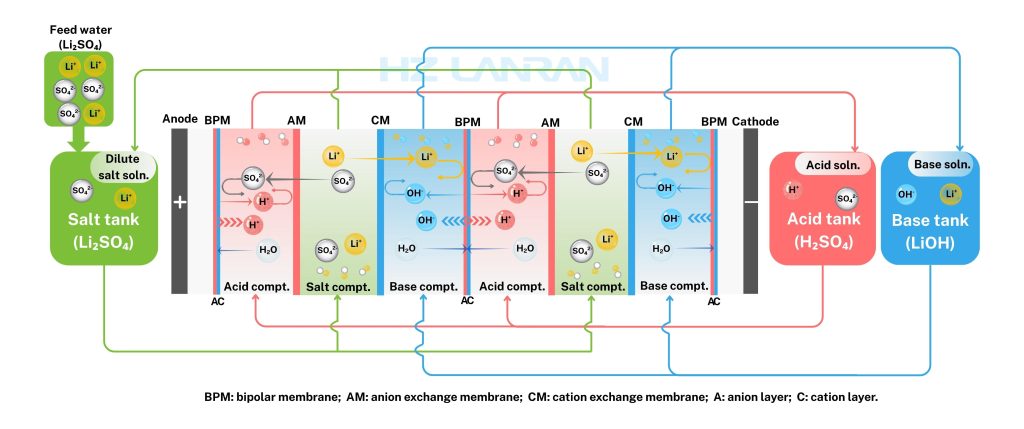
Bipolar Membrane Electrodialysis is an electrically driven separation and conversion technology that combines bipolar membranes, cation exchange membranes, and an electric field.
Inside the bipolar membrane, water molecules are dissociated into hydrogen ions (H⁺) and hydroxide ions (OH⁻).
During operation:
Lithium ions (Li⁺) migrate through cation exchange membranes into the base compartment.
Hydroxide ions (OH⁻) generated by the bipolar membrane combine with lithium ions to form lithium hydroxide (LiOH).
Sulfate ions migrate toward the acid compartment and combine with hydrogen ions (H⁺) to produce sulfuric acid (H₂SO₄).
The overall reaction can be expressed as:
Li₂SO₄ + 2H₂O → 2LiOH + H₂SO₄
As a result, lithium sulfate recovered from battery black mass can be directly converted into lithium hydroxide solution while simultaneously generating reusable sulfuric acid.
After concentration and crystallization, battery-grade lithium hydroxide monohydrate (LiOH·H₂O) can be produced.
Advantages of BPED for Lithium Battery Recycling
- Reduced Chemical Consumption
Unlike conventional causticization processes that require sodium hydroxide or lime, BPED uses electricity as the primary driving force. This significantly reduces chemical consumption and operating costs.
- No Gypsum Waste Generation
Traditional lithium hydroxide production routes often generate large quantities of gypsum by-products. BPED eliminates this issue, helping recyclers reduce waste treatment requirements and environmental impact.
- Simultaneous Acid and Base Production
The technology produces lithium hydroxide and sulfuric acid simultaneously. The recovered acid can often be reused within the recycling process, improving overall resource efficiency.
- Higher Resource Utilization
BPED enables efficient conversion of lithium salts into valuable battery materials while supporting closed-loop recycling and resource recovery.
- Lower Carbon Footprint
As an electrically driven process, BPED can be integrated with renewable energy sources, providing a lower-carbon alternative to conventional chemical conversion technologies.
Lanran’s Proven Experience in Lithium Resource Recovery
Leveraging extensive expertise in ion exchange membranes, bipolar membrane technology, and industrial electrodialysis systems, Lanran has successfully delivered multiple lithium resource recovery projects for the battery materials industry.
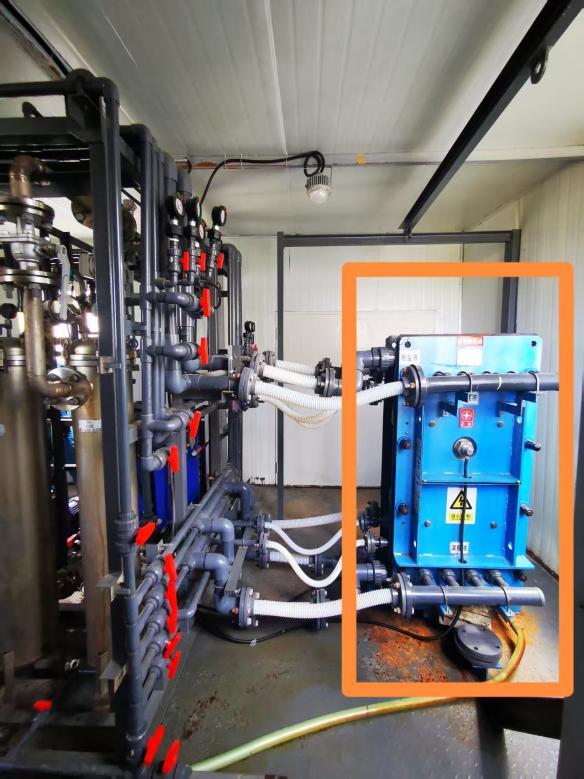
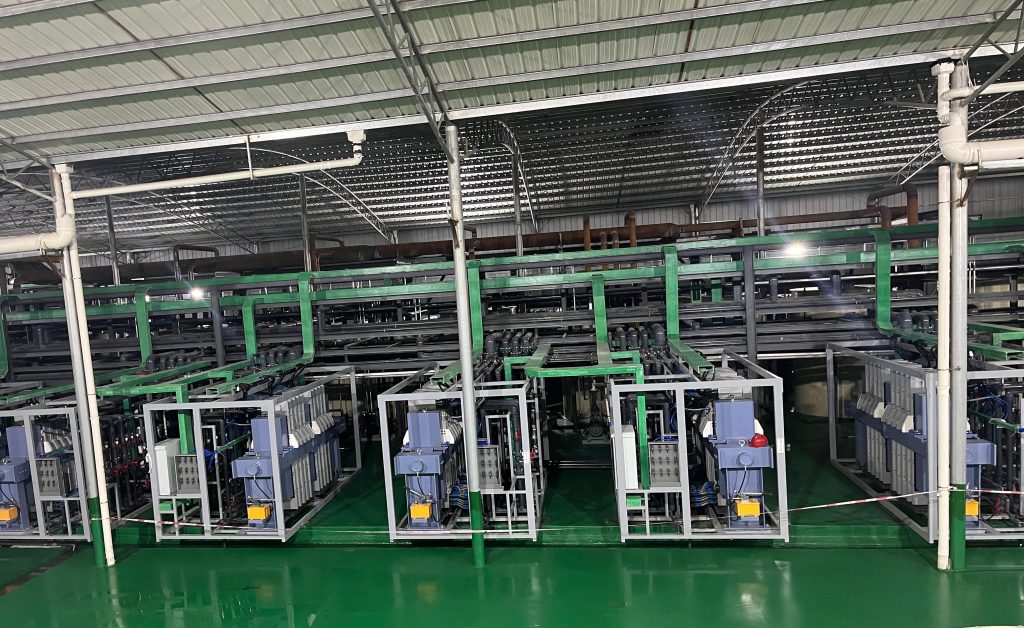
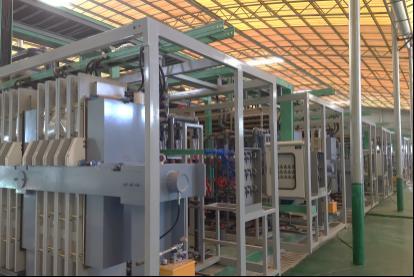
A representative example is a 12,500 t/a battery-grade LiOH·H₂O production plant in Jiangxi Province, China, which has been operating commercially since 2021. Using Lanran’s BPED technology, the facility converts lithium sulfate (Li₂SO₄) into high-purity lithium hydroxide and sulfuric acid with stable industrial performance.
Lanran’s BPED solutions support:
- Conversion of lithium sulfate into lithium hydroxide
- Lithium recovery and purification
- Recycling of battery black mass leachates
- Resource recovery from battery manufacturing wastewater
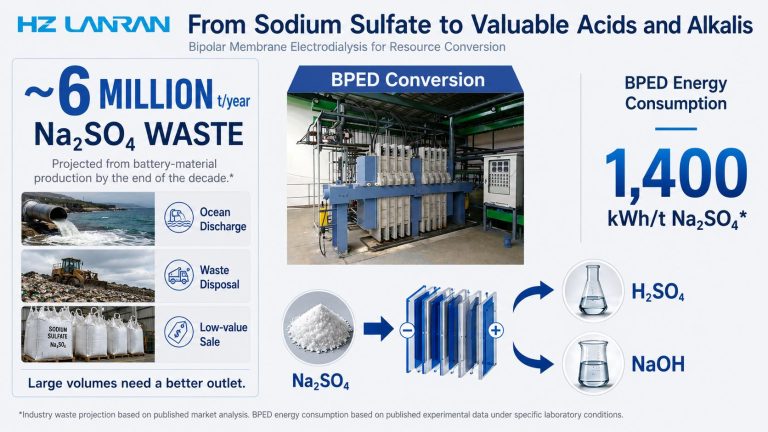
- Conversion of sodium sulfate into value-added chemicals
Backed by multiple industrial references and years of successful operation, Lanran continues to help customers advance lithium recycling, resource recovery, and sustainable battery material production.